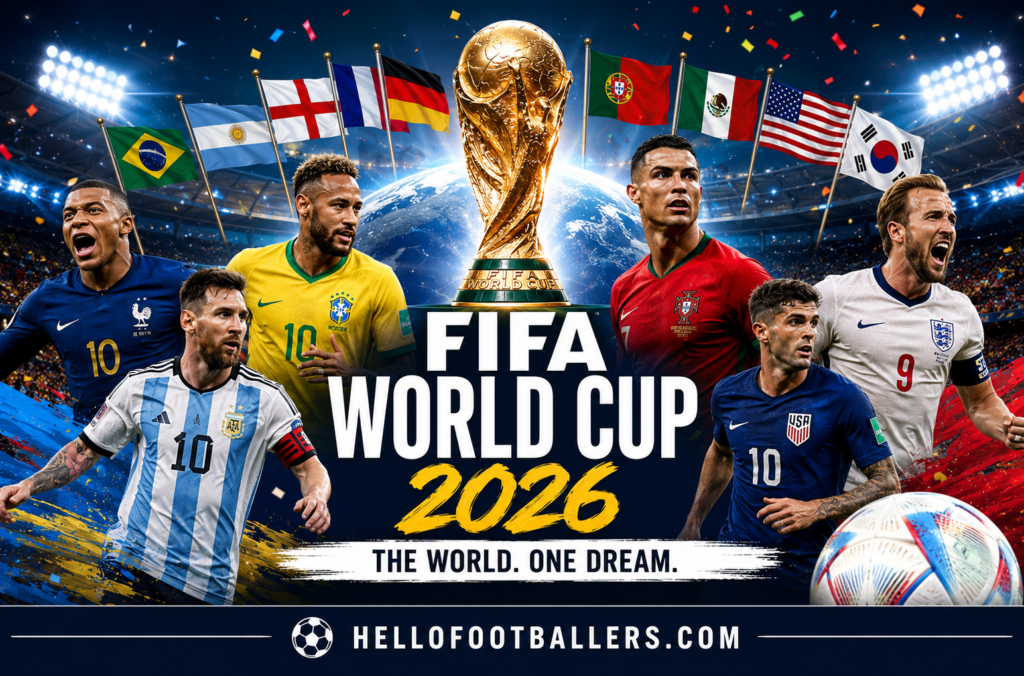

Lionel Messi broke the all-time FIFA World Cup goals record with a dramatic double for Argentina against Austria at the 2026 World Cup.
Lionel Messi World Cup goals record
The Night Messi Turned History Into Theatre
Lionel Messi did not break the all-time FIFA World Cup goals record in a quiet, simple, comfortable way.
Of course he didn’t.
He missed a penalty first.
He felt the tension rise. He heard the noise change. He saw Austria grow in belief. For a few uncomfortable minutes in Arlington, Texas, the greatest player of his generation looked human on the biggest stage in football.
Then came the answer.
A left-footed finish. A roar from the Argentina supporters. A swarm of teammates. A record that had stood since Miroslav Klose’s final World Cup in 2014 was gone.
Messi had done it.
With two goals in Argentina’s 2-0 win over Austria at the 2026 FIFA World Cup, Messi moved to 18 career World Cup goals, passing Klose’s mark of 16 and becoming the tournament’s all-time leading scorer. It was not just another record. It was the kind of moment that makes fans stop, stare and understand they are watching the final chapters of a football life that may never be repeated.
Argentina won. Messi made history. And the 2026 World Cup suddenly had its defining image.
Quick Facts Table
| Category | Detail |
|---|---|
| Match | Argentina 2, Austria 0 |
| Competition | FIFA World Cup 2026 |
| Venue | Dallas Stadium, Arlington, Texas |
| Record broken | All-time FIFA World Cup goals record |
| Previous record holder | Miroslav Klose, Germany — 16 goals |
| Messi’s new total | 18 World Cup goals |
| Key moment | Messi scored his record-breaking 17th goal before adding No. 18 late |
| Group | Group J |
| Argentina’s record | 2 wins, 0 losses |
| Standings impact | Argentina qualified for the Round of 32 |
| Golden Boot impact | Messi moved to the top of the 2026 scoring race |
Main Story: How Messi Passed Klose
For years, the World Cup scoring record looked like a monument built for specialists.
Klose was the model of tournament efficiency. The Germany striker scored 16 goals across four World Cups, built on timing, movement, aerial power and cold finishing. He was not always the headline star, but he was relentless.
Messi’s path was different.
His World Cup story began in 2006, when he was a teenage wonder. It passed through heartbreak in 2010, agony in the 2014 final, frustration in 2018 and ultimate redemption in 2022. By the time Argentina lifted the trophy in Qatar, many believed the story was complete.
But Messi came back for 2026.
At nearly 39, he arrived not as the electric winger of his youth but as something more dangerous in a different way: a calmer, sharper, wiser version of himself. He picked his moments. He conserved energy. He let younger legs run around him. Then he punished mistakes.
The record chase exploded in Argentina’s opening match, when Messi scored a hat trick in a 3-0 win over Algeria. That performance moved him level with Klose on 16 World Cup goals.
Against Austria, everyone knew what was waiting.
One goal would put Messi alone at the top.
Austria tried to deny him space. At times, defenders collapsed around him. They stepped tight, doubled up and tried to turn the game physical. For a while, it worked.
Then came the missed penalty. For any other player, it might have become the story. For Messi, it became the setup.
In the 38th minute, he found the pocket he needed. The finish was classic Messi: balanced, quick and brutal. His left foot opened history. Argentina led 1-0. Messi had No. 17.
Late in the match, he added another. Goal No. 18 gave Argentina breathing room, sealed the win and turned a record-breaking night into a complete performance.
Key Moments and Turning Points
The Missed Penalty That Changed the Mood
Messi’s early penalty miss gave Austria belief and added drama to a night that already carried enormous weight.
The miss mattered because it reminded everyone that records are not handed out. They are chased under pressure, with defenders in front, millions watching and history waiting to judge every touch.
For a few minutes, Argentina looked rattled. Austria pushed higher. The match became tense.
Then Messi turned the mistake into motivation.
The 38th-Minute Breakthrough
The record-breaking goal came before halftime, and the timing was huge.
Argentina needed control. Messi needed one clean sight of goal. When the chance arrived, he did what he has done for two decades: He made the finish look easier than it was.
That goal did more than pass Klose. It changed the match. Austria had to open up. Argentina could manage the tempo. The crowd shifted from anxious to celebratory.
The Late Second Goal
The second goal showed why Messi’s record may still grow.
He did not stop after making history. He stayed involved, kept reading the game and finished the night with another decisive contribution.
At 18 World Cup goals, Messi did not just claim the record. He created separation.
Match Analysis: Argentina Did Not Need Perfection, Just Messi
Argentina’s performance was not flawless.
Austria made the defending champions work. They pressed, competed physically and tried to make the match uncomfortable. There were moments when Argentina lacked fluency in possession and had to defend with urgency.
But Argentina still had the one advantage few teams in football history have ever enjoyed: Messi between the lines.
This version of Argentina is not built only around Messi’s dribbling. It is built around timing. Julián Álvarez, Thiago Almada, Alexis Mac Allister and Enzo Fernández give the team legs, aggression and movement. Messi supplies the final idea.
That balance is what makes Argentina dangerous in 2026.
They can suffer without collapsing. They can play through pressure. They can win a match even when the first big Messi moment goes wrong.
Against Austria, that resilience mattered. The defending champions did not panic after the penalty miss. They trusted the structure. They trusted the captain. Eventually, the record arrived.
Tournament Analysis: Why This Record Feels Bigger in 2026
The 2026 World Cup is different.
It is the first men’s tournament with 48 teams, 12 groups and a Round of 32. That means more matches, more travel, more knockout jeopardy and more chances for chaos.
For Argentina, the expanded format adds both opportunity and pressure. More teams advance, but the path can quickly become awkward. One bad day in the knockout rounds can still end everything.
That is why qualifying early matters.
Argentina’s win over Austria gave the defending champions six points from two games and a place in the next round with one group match to spare. That changes the tone of the campaign. Lionel Scaloni can manage legs, rotate if needed and protect key players before the knockout rounds.
For Messi, that is massive.
At this stage of his career, recovery is part of the tactics. Every sprint matters. Every extra day counts. Argentina’s early qualification means Messi’s record chase is no longer fighting against group-stage pressure. The team can now think bigger.
Standings Impact: Argentina Takes Control of Group J
Argentina’s 2-0 win over Austria put the defending champions firmly in charge of Group J.
After beating Algeria 3-0 and Austria 2-0, Argentina had six points, five goals scored and none conceded. That is the ideal start for a team trying to defend a World Cup title.
Group J after Argentina’s second match:
| Position | Team | Points | Goal Difference |
|---|---|---|---|
| 1 | Argentina | 6 | +5 |
| 2 | Austria | 3 | 0 |
| 3 | Jordan | 0 | -2 |
| 4 | Algeria | 0 | -3 |
The bigger story is qualification.
Under the 2026 format, the top two teams in each group advance, along with the eight best third-place teams. Argentina no longer has to sweat that math. It is through to the Round of 32.
That gives the world champions something more valuable than a record: control.
Golden Boot Impact: Messi Leads the Race Again
Messi’s two goals against Austria pushed him to five goals in two matches at the 2026 World Cup.
That put him at the front of the Golden Boot race, ahead of a heavyweight chasing pack that includes Kylian Mbappé and Erling Haaland.
This is one of the most exciting individual battles of the tournament. Messi is no longer just competing against history. He is competing against the next era.
Mbappé already owns one of the greatest World Cup scoring profiles in modern football. Haaland, finally on the World Cup stage with Norway, brings a frightening mix of power, speed and finishing.
But Messi still has something neither can copy: total command of the moment.
He does not need 10 shots. He does not need constant touches. He can decide a match with one pause, one angle, one swing of his left foot.
That is why the Golden Boot race suddenly feels personal, historic and generational.
Why Fans Are Talking About This
Fans are talking about Messi’s record because it touches every part of the football imagination.
It is about numbers, yes. Eighteen World Cup goals is a staggering total.
But it is also about time.
Messi scored his first World Cup goal as a teenager in 2006. Now, 20 years later, he is still scoring in the same tournament. Entire generations of fans have grown up watching him. Some saw the young Barcelona genius. Others discovered him through the Argentina heartbreak years. Younger fans may know him first as the 2022 World Cup winner and Inter Miami superstar.
Now they all share this moment.
The record also lands 40 years after Diego Maradona’s unforgettable 1986 World Cup performance against England, a piece of Argentine football history that still lives in every debate about greatness. Messi’s record-breaking night does not replace Maradona’s mythology. It adds another chapter beside it.
Argentina now has two football gods with World Cup stories too big for normal language.
Social Media Reactions: A Global Messi Moment
The reaction online was instant.
Argentina fans filled timelines with photos of Messi pointing to the sky, teammates embracing him and the No. 10 shirt glowing under the stadium lights. Supporters in Buenos Aires, Miami, Barcelona, Toronto, London and across the football world treated the goal like a shared memory.
On X, fans debated whether the record finally ends the greatest-of-all-time argument.
On Instagram, tribute graphics appeared within minutes.
On TikTok, clips of the missed penalty and the record-breaking goal were edited together as a mini movie: doubt, pressure, redemption.
The emotional hook was obvious. Messi did not glide into the record. He stumbled, recovered and delivered. That made the moment feel human.
Expert Analysis: Why Messi Is Still Different
What separates Messi at this age is not speed. It is control.
He understands when to rest inside a match. He knows when to drift. He knows when a defender is leaning the wrong way. He knows when the goalkeeper has taken one step too many.
Against Austria, that intelligence mattered more than athletic dominance.
Scaloni’s Argentina gives Messi a platform. The midfield protects him. The forwards stretch the pitch. The fullbacks provide width. In return, Messi gives the team clarity.
When matches get chaotic, he slows the picture down.
Austria manager Ralf Rangnick praised Messi’s quality after the match but also questioned whether a foul should have been called in the buildup to the first goal. That controversy will interest fans, especially because record-breaking moments are always examined frame by frame.
But controversy does not erase the finish. It only adds to the conversation.
Great World Cup moments often come with debate. This one now has both: a historic goal and a talking point.
What This Means Going Forward
Messi’s record changes the emotional temperature around Argentina’s World Cup.
Before the Austria match, the question was whether Messi could catch Klose.
Now the question is how far he can push the record.
Could he reach 20 World Cup goals? Could he win another Golden Boot? Could Argentina make another deep run? Could this final World Cup chapter become even more dramatic than Qatar?
The answers depend on fitness, rotation, opponents and knockout pressure. But one thing is clear: Messi is not simply here for a farewell tour.
He is shaping the tournament.
Argentina’s younger players will also feel the lift. When a captain breaks a record like this, it can energize a dressing room. It gives the team a sense of destiny, even if coaches try to avoid that word.
For opponents, it creates a problem. Mark Messi too tightly, and Argentina’s runners find space. Give him a yard, and he can end your World Cup.
That dilemma has existed for years. In 2026, it still has no easy answer.
What’s Next?
Argentina has one group match remaining before the Round of 32.
The final group game may give Scaloni a chance to manage minutes and protect key players, but Argentina will still want to finish first in Group J. Winning the group could shape the knockout path and help maintain momentum.
For Messi, the next match brings another layer of intrigue.
Every goal now extends the record. Every appearance adds to his World Cup legacy. Every touch may be part of the final international tournament run of his career.
The world will watch because no one knows how many of these nights are left.
That is what makes it powerful.
Messi has given football fans records before. This one feels different because it comes with the awareness that time is running out.
Interesting Facts
- Messi now has 18 career FIFA World Cup goals.
- He passed Miroslav Klose, who held the record with 16 goals.
- Messi reached the record after scoring a hat trick against Algeria and twice against Austria.
- His 2026 total stands at five goals in two matches.
- Messi has scored in six consecutive World Cup matches, joining rare company in tournament history.
- Argentina has opened the 2026 World Cup with two wins, five goals scored and none conceded.
- Messi’s record-breaking night came in the United States, where he has become a major football figure since joining Inter Miami.
FAQs
How many FIFA World Cup goals does Lionel Messi have now?
Lionel Messi has 18 career FIFA World Cup goals after scoring twice for Argentina against Austria at the 2026 World Cup.
Whose FIFA World Cup goals record did Messi break?
Messi broke Miroslav Klose’s all-time men’s FIFA World Cup scoring record. Klose scored 16 goals for Germany across four World Cups.
When did Messi break the World Cup goals record?
Messi broke the record during Argentina’s 2-0 win over Austria in the 2026 FIFA World Cup group stage.
Did Messi miss a penalty against Austria?
Yes. Messi missed an early penalty before scoring the record-breaking goal and later adding another goal.
How many goals has Messi scored at the 2026 World Cup?
Messi has scored five goals in his first two matches at the 2026 World Cup.
Has Argentina qualified for the 2026 World Cup knockout stage?
Yes. Argentina’s wins over Algeria and Austria gave the defending champions six points and secured a place in the Round of 32.
Can Messi win the 2026 Golden Boot?
Yes. Messi is leading the Golden Boot race after two matches, but Kylian Mbappé, Erling Haaland and other top forwards remain close behind.
Conclusion: Messi’s Record Is More Than a Number
Lionel Messi’s 18th World Cup goal will sit in record books as a statistic.
But the night itself was bigger than that.
It had pressure. It had a missed penalty. It had a response. It had controversy. It had Argentina fans watching one of their heroes write another line into football history.
Messi did not just break Klose’s record. He made the moment feel alive.
At 38, days away from another birthday, he is still carrying Argentina through World Cup nights. He is still bending matches toward his story. He is still giving fans a reason to believe the impossible has one more chapter.
The 2026 World Cup already had stars, storylines and pressure.
Now it has its signature moment.
Lionel Messi stands alone as the all-time FIFA World Cup goals leader.
And somehow, he may not be finished yet.